Español
 عربى
عربى
 Deutsch
 русский
 Français

Ball Valve Manufacturing Is a Chain of Controlled Steps
A valve that leaks after six months of service is rarely a random failure. More often, the cause can be traced to an internal void, an off-center ball, or a plating layer that was too thin. Ball valve manufacturing is not a single operation. It is a sequence of material, forming, machining, assembly, and testing decisions that determine whether the valve lasts for years or becomes a maintenance problem.
Understanding that sequence helps buyers ask better questions. Where is the body formed? What is the surface finish on the ball? Is every valve pressure-tested, or only a sample? These questions matter whether you are buying for a residential plumbing project, a commercial water supply network, or an industrial maintenance contract. This is one reason why brass ball valves are a core component of modern piping systems: the process is mature, but only strict control at every step produces consistent quality.
Forming the Body: Forging vs. Casting
Most small and medium brass ball valve bodies start as cut brass rod or billet. The blank is heated and forged into shape, or, for more complex geometries, cast. Forging compresses the material grain structure, which gives a denser body with fewer internal voids and better pressure integrity. Casting is more suitable for large flanged bodies and low-volume shapes that would be wasteful to forge. However, castings require close inspection for porosity because hidden voids can cause leaks under pressure.
Machining and Ball Production
After forming, the body goes into CNC machining. Threads, end connections, stem holes, and seat pockets are cut to tolerances often measured in hundredths of a millimeter. The ball itself is produced separately. A good ball is spherical within a tight roundness tolerance, and its surface finish directly affects operating torque and sealing. Even a small scratch on the ball can create a leak path that only appears after installation.
Assembly, Plating, and Sealing
Assembly brings together the body, ball, seats, stem, seals, and handle. In many factories, assembly is followed by nickel plating. The plating layer improves corrosion resistance and gives the valve a stable appearance. Plating quality depends heavily on pre-treatment: if the surface is not clean and properly activated, the nickel will peel or blister later in service.
Pressure Testing: The Final Gate
A manufacturer’s claim is only as strong as its testing routine. Most reputable manufacturers test each valve rather than a random sample. Common practice follows a shell test at 1.5 times the rated pressure to check body integrity, and a seat test at 1.1 times the rated pressure to check leakage at the closure. The valve is pressurized with air or water, held for a specified time, and checked for visible leakage or pressure decay. Valves that fail are rejected or reworked before shipment.
Choosing the Right Material for the Duty
Material selection is the first decision that drives manufacturing cost and field performance. In ball valve production, the three most common material families are brass, bronze, and stainless steel. Each has a different behavior during forging or casting, machining speed, plating response, and long-term corrosion resistance.
Brass in Standard Water Service
Brass is the default material for many residential and commercial ball valves. It machines well, costs less than bronze or stainless steel, and performs reliably in potable water, heating circuits, and compressed air systems. When surface corrosion is a concern, nickel plating adds a dense protective layer. A practical example is a nickel-plated brass full-port ball valve, which combines the machining economy of brass with better surface durability. For a closer look at surface performance, you can also read why nickel-plated brass full-port ball valves hold up over time.
 Wholesale GH-1003 Nickel plated brass full port ball valve Suppliers, Factory -Ninghai Gaohua Metalwork Products Co., Ltd is China wholesale GH-1003 Nickel plated brass full port ball valve suppliers and factory,A n...View Product →
Bronze in Corrosive Environments
Bronze, a copper-tin alloy, offers stronger resistance to salt water and brackish water than ordinary brass. Bronze ball valves are often specified for marine environments, coastal buildings, and certain industrial fluids. The trade-off is higher material cost and different machining behavior. A manufacturer needs specific tooling experience to produce consistent threads and sealing surfaces in bronze without excessive tool wear.
Stainless Steel for Higher Pressures and Aggressive Media
Stainless steel ball valves provide higher mechanical strength, a wider temperature range, and better chemical resistance than brass or bronze. They are heavier, harder to machine, and noticeably more expensive. In manufacturing, stainless steel demands slower cutting speeds, more rigid tooling, and careful handling to avoid surface contamination. It is usually the right choice for the jobs where brass and bronze would fail quickly.
Manufacturing Defects and the Controls That Prevent Them
Procurement records and field returns tend to show the same defects again and again. Knowing how these problems start in the factory makes it easier to evaluate a supplier and to spot risk before placing a large order.
| Defect | Root Cause | Process Control |
|---|---|---|
| Leakage through closed valve | Rough ball surface or damaged seat | Measure ball roundness and seat compression during assembly; test each valve |
| Body weep or crack | Porosity from casting or poor forging | Use forged blanks where possible; conduct shell test on every unit |
| Handle hard to turn | Stem-ball misalignment or plating build-up | Control concentricity; check operating torque after assembly |
| Plating peeling | Contaminated surface before plating | Clean and activate the surface before the nickel bath |
| Thread leak | Incorrect thread depth or pitch | Inspect threads with calibrated gauges |
This table is not only useful for engineers. Buyers can use it during a factory audit to ask where each check happens, who records the result, and whether the records are available for a specific production batch.
What to Look for in a Ball Valve Manufacturer
Finding a capable ball valve manufacturer is less about looking at glossy brochures and more about verifying control over the production chain. A factory that handles more steps internally is usually better positioned to keep quality consistent and to respond quickly when something goes wrong.
Vertical Integration and In-House Testing
Ask whether the factory cuts its own blanks, performs its own machining, does its own plating, and owns its pressure test equipment. If key steps are outsourced, traceability becomes harder. For larger and heavier designs, the same logic applies. A brass flanged ball valve with manual handle needs accurate flange faces, clean body material, and careful machining of the bore, all of which depend on in-house process control. In-house testing also shortens the loop when batch records need to be pulled for a customer inquiry.
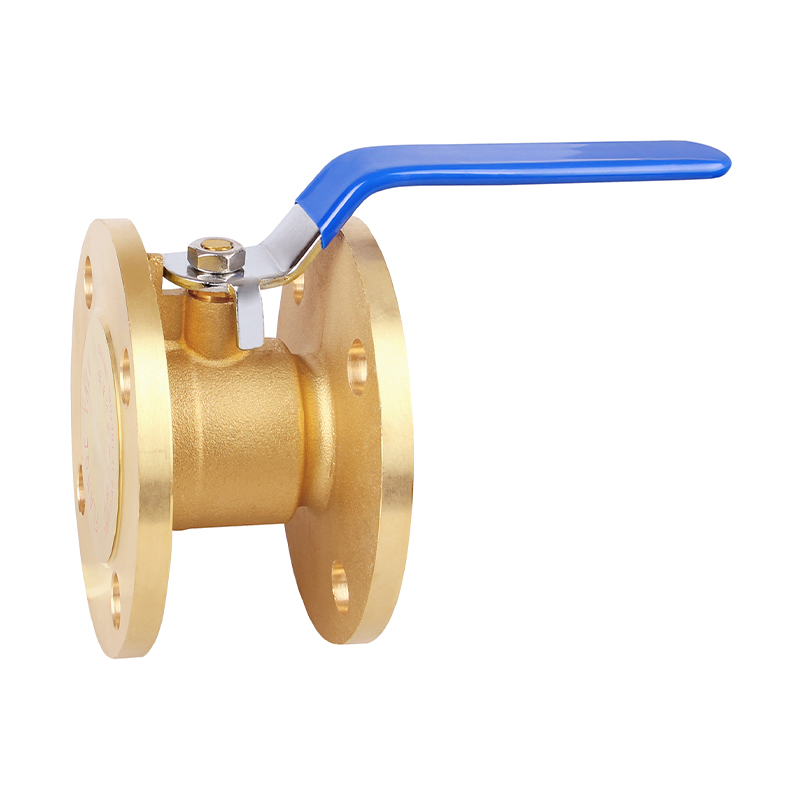 Wholesale GH-1034 Brass flanged ball valve manual handle Suppliers, Factory - NNinghai Gaohua Metalwork Products Co., Ltd is China wholesale GH-1034 Brass flanged ball valve manual handle suppliers and factory,Brass...View Product →
Product Range and Connection Options
Ball valves are not a single product type. They differ by end connection: female thread, male thread, sweat, press-fit, PEX, compression, and flange. They also differ by bore size, handle type, plating, and locking function. A supplier with a broad range helps you standardize purchasing and avoid mismatched specifications. If the duty calls for a larger bore with better corrosion margin, a bronze full-port ball valve is a practical option. If you need a shut-off valve for a water meter installation, lockable or tamper-resistant designs are worth discussing.
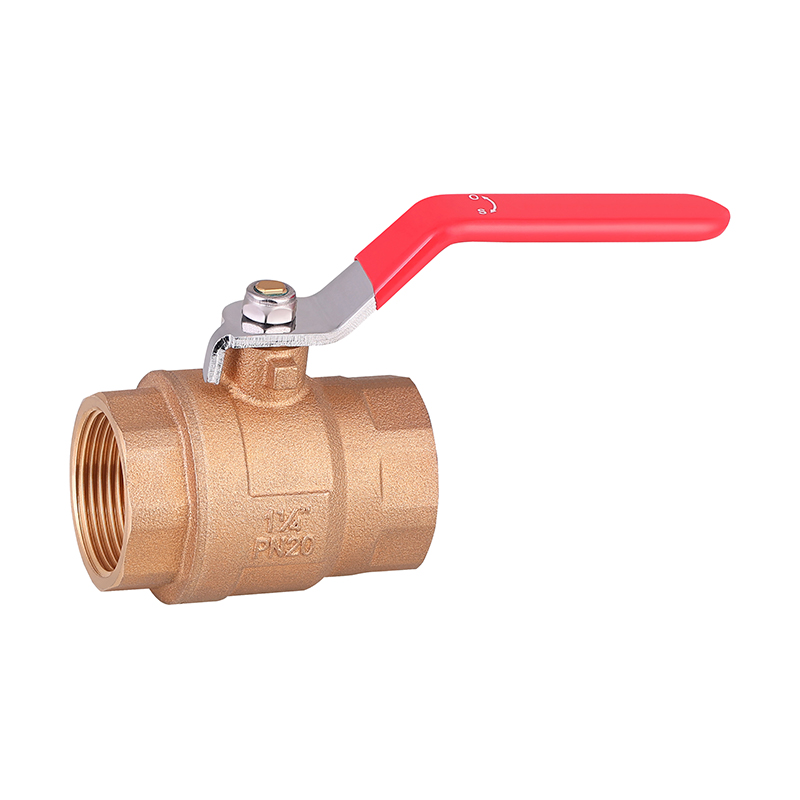 Wholesale GH-1035 Bronze full port ball valve Suppliers, Factory - Ninghai GaohuNinghai Gaohua Metalwork Products Co., Ltd is China wholesale GH-1035 Bronze full port ball valve suppliers and factory,The bronze full p...View Product →
Documentation and Communication
A good manufacturer gives you material specifications, pressure ratings, and surface treatment details before the order, not just after. The sales engineer should be able to explain the difference between full-port and reduced-port, describe the plating thickness range, and state the test method used for each batch. If a supplier cannot answer these questions clearly, treat that as a warning sign.
A Practical Supplier Checklist
- Confirm that the factory performs forming, machining, plating, assembly, and testing in-house.
- Ask for the shell test pressure, seat test pressure, and hold time used for every batch.
- Check whether the product range covers the connection types and bore sizes you need.
- Request material and surface treatment documentation before sample approval.
- Start with a small pilot order and verify incoming quality before scaling up.
The Bottom Line for Buyers
Ball valve manufacturing rewards attention to method. The best suppliers are transparent about materials, forming, machining, plating, and testing. They let you see the process, answer technical questions, and prove quality with production data. When evaluating a manufacturer, look for the same precision in their documentation that you expect in the product. The manufacturing process may be familiar, but the difference between a reliable valve and a recurring problem is almost always found in the details.