Español
 عربى
عربى
 Deutsch
 русский
 Français

The Enduring Appeal ofVintage Weatherproof Brass Lampshades
Few lighting fixtures carry the accumulated weight of history the way a vintage weatherproof brass lampshade does. Whether mounted above a Georgian townhouse doorway, crowning a Victorian garden lantern, or illuminating a covered veranda on a plantation-era estate, these fixtures have served as both functional light sources and enduring symbols of craftsmanship, permanence, and architectural intention. Their continued presence—on heritage buildings, in period-accurate restorations, and in contemporary spaces that seek warmth and material honesty—speaks to a design lineage that has proven genuinely irreplaceable.
The term encompasses a broad family of forms united by three defining characteristics: construction in brass or brass alloy, a design aesthetic rooted in pre-twentieth-century lighting traditions, and engineering sufficient to withstand outdoor exposure across decades of seasonal cycling. Understanding what distinguishes a genuine high-quality vintage or vintage-style brass lampshade from a decorative facsimile requires examining each of these dimensions in turn—the metallurgy, the historical context, the weatherproofing engineering, and the aesthetic vocabulary that makes these objects so persistently desirable.
"Brass weathers into beauty. Few other materials improve with exposure, acquiring a patina that is simultaneously a record of time and an enhancement of form."
History & Heritage
A Material HistoryFrom Gas Mantles to Electric Luminaires
The story of the weatherproof brass lampshade begins not with electricity but with open flame. By the early nineteenth century, urban street lighting across Britain and continental Europe had transitioned from oil lanterns to coal gas, and the fixtures that housed these gas burners established the visual vocabulary that brass outdoor lighting still draws upon today. Cast brass arms, pressed dome shades, and prismatic refractor lenses became standard elements of civic and domestic outdoor lighting from roughly 1820 onward.
The material choice was never arbitrary. Brass—an alloy of copper and zinc, typically in ratios between 60:40 and 70:30—offered a combination of properties unmatched by alternatives of the era. It was readily cast or drawn into complex forms, it soldered and brazed easily for watertight assembly, it resisted corrosion through the natural formation of a protective oxide layer, and it could be polished to a lustrous golden finish or allowed to develop a rich verdigris patina that many considered more beautiful than the raw metal. Where iron would rust and tin would pit, brass endured.
The Victorian Outdoor Lighting Tradition
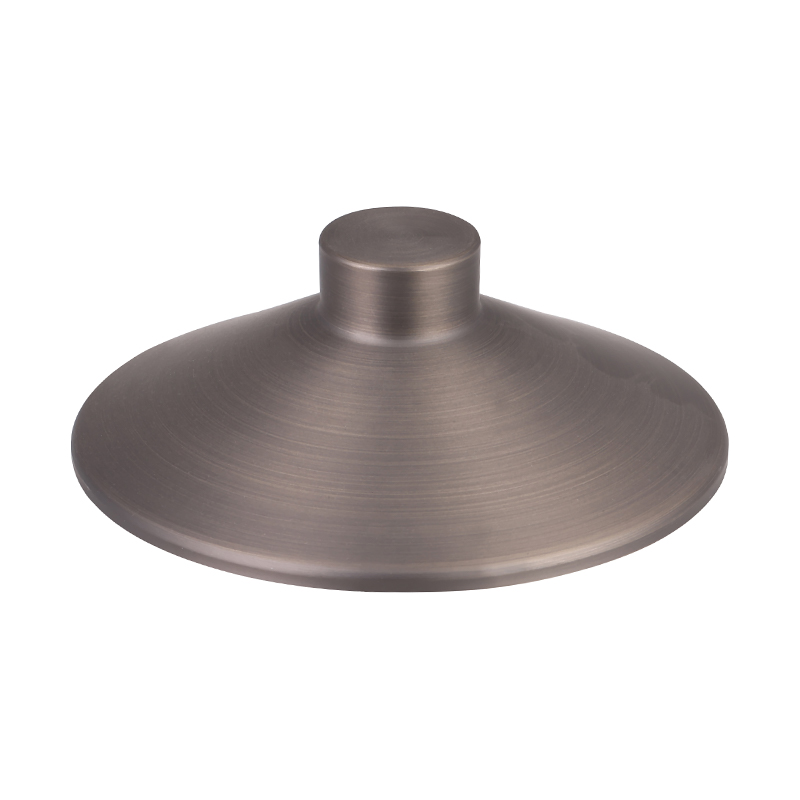
Victorian-era outdoor brass lampshades fall into several distinct typological families that continue to inform reproduction and vintage-style designs today. The dome shade—a simple hemispherical or slightly pointed pressed-brass form with a rolled or beaded rim—was the workhorse of domestic porch and garden lighting. The pagoda shade, with its multi-tiered profile drawn from Anglo-Chinese decorative vocabulary, appeared frequently in more elaborate garden settings from the 1860s onward. The coolie shade, with its wide conical profile and pronounced downward flare, maximized ground illumination from relatively modest gas burners and translated effectively to early electric incandescent sources.
Construction methods of the period relied almost entirely on hand skills. Brass sheet was cut, raised or spun on a lathe, and soldered with lead-tin or silver-bearing solders. The seam quality was the critical determinant of weatherproofing: a well-executed lap solder joint, dressed smooth and dressed with flux before finishing, would remain watertight for a century or more. Many Victorian brass lampshades surviving today in garden archaeology or reclamation yards demonstrate joints of this quality—tarnished and patinated but structurally intact.
Arts and Crafts and Art Nouveau Influence
The late nineteenth-century reaction against industrial uniformity—embodied in the British Arts and Crafts movement and its European Art Nouveau counterpart—produced some of the most aesthetically distinguished outdoor brass lampshades ever made. Craftsmen such as W.A.S. Benson in England embraced machine production but applied it to forms of genuine elegance: spun brass shades with hand-chased surface decoration, cast galleries with naturalistic motifs (stylized lily pads, dragonfly wings, intertwined stems), and patinated finishes that honored the material's natural aging behavior rather than fighting it. These pieces commanded premium prices in their own time and are today among the most sought-after vintage brass lighting fixtures in the collector and restoration market.
Materials & Metallurgy
Understanding BrassAlloy Composition and Outdoor Performance
Not all brass performs equally in outdoor service. The specific alloy composition, the manufacturing method, and the surface treatment applied all determine how a lampshade weathers over years and decades of exposure to rain, temperature cycling, ultraviolet radiation, and atmospheric pollutants.
Principal Brass Alloys in Lighting Manufacture
| Alloy | Composition | Properties | Outdoor Suitability |
|---|---|---|---|
| CW614N (Free-Machining) | 58% Cu, 39% Zn, 3% Pb | Excellent machinability, good strength | Good; lead content limits use near water sources |
| CW508L (Cartridge Brass) | 70% Cu, 30% Zn | Superior ductility, deep-draw capable | Very good; preferred for spun and drawn shades |
| CW612N (Naval Brass) | 59% Cu, 40% Zn, 1% Sn | Enhanced corrosion resistance, tin addition | Excellent; tin inhibits dezincification |
| CW453K (Admiralty Brass) | 70% Cu, 29% Zn, 1% Sn | High corrosion resistance, moderate strength | Excellent; marine and coastal applications |
| Silicon Bronze | 96% Cu, 3% Si, 1% Mn | Very high corrosion resistance, weldable | Outstanding; premium architectural work |
The most significant metallurgical concern for outdoor brass lighting is dezincification—a selective corrosion process in which zinc migrates out of the alloy, leaving behind a porous, weakened copper sponge. This occurs primarily in alloys with zinc content above 15% when exposed to stagnant water or aggressive soil conditions. Tin additions (as in naval and admiralty brass alloys) inhibit dezincification by stabilizing the zinc within the alloy matrix. For vintage weatherproof brass lampshades intended for permanent outdoor installation, specifying a tin-bearing alloy or a dezincification-resistant (DZR) grade is a sound long-term investment.
Manufacturing Methods and Their Effect on Quality
The method by which a brass lampshade body is formed has direct implications for its mechanical integrity and weatherproofing capability. Spinning—in which a rotating brass disc is formed over a hardened mandrel using a handheld or CNC-controlled tool—produces seamless single-piece shade bodies with uniform wall thickness and excellent grain structure. Spun brass shades, when formed from cartridge brass (70/30 alloy), have no seams to leak and are naturally stronger than fabricated alternatives. Pressing (stamping) is faster and more economical for high-volume production but typically requires multiple drawn sections joined by soldering or mechanical clinching. Sand casting produces the complex gallery, finial, and bracket components that characterize period-style designs; high-quality castings are dense and free of porosity, while low-quality castings exhibit voids that compromise both structural integrity and the ability to hold a watertight solder joint.
Engineering
Weatherproofing ArchitectureKeeping Water and Corrosion Out
A brass lampshade that is beautiful but admits water to its lamp cavity is a liability, not an asset. The weatherproofing of outdoor brass lampshades involves overlapping layers of design, material, and joinery decisions, each of which must function reliably across the thermal and mechanical stresses of outdoor service.
Design
Drainage Geometry
Well-designed shade profiles direct rain runoff away from electrical components via sloped surfaces, drip edges with undercut profiles, and drainage apertures that allow accumulated condensation to escape without admitting wind-driven rain.
Sealing
Gasket Systems
Silicone or EPDM gaskets at all glazing interfaces and mounting flanges prevent water ingress under positive pressure from driving rain. Period-reproduction designs use machined brass compression rings that replicate the joinery methods of original Victorian fixtures.
Electrical
IP Rating Compliance
Modern vintage-style brass lampshades for outdoor use carry IP ratings per IEC 60529. IP44 (splash-proof) suits covered porches; IP65 (dust-tight, jet-resistant) is required for fully exposed wall and post-top locations.
Joinery
Sealed Assembly
All solder joints, thread connections, and press-fit interfaces in quality outdoor brass lampshades are sealed with corrosion-resistant jointing compounds or silver-bearing solders that resist joint opening under thermal cycling from −20 °C to +60 °C.
Glazing
Glass Selection
Diffusing opal glass, seeded glass, and antique-style amber or clear glass are common in period brass lampshades. Tempered or borosilicate glass is specified in high-output LED or halogen applications to resist thermal shock from rapid temperature changes.
Coating
Protective Lacquers
Exterior-grade clear lacquers (polyurethane or two-part acrylic) lock in the polished or antiqued finish and add a chemical barrier against acid rain and urban pollutants. Unlacquered brass is specified when a living patina is the desired aesthetic outcome.
IP Ratings Explained for Outdoor Brass Lighting
The Ingress Protection (IP) rating system provides a standardized, testable measure of a fixture's resistance to solid particle and water ingress. For vintage weatherproof brass lampshades, the water protection digit (the second digit in the IP code) is the governing specification:
- IP23: Resistance to vertically falling water sprayed at up to 60° from vertical. Suitable for covered outdoor locations with minimal exposure to driven rain.
- IP44: Protection against water splashed from any direction. The standard minimum specification for open porch, canopy, and soffit-mounted fixtures.
- IP54: Dust-limited ingress, water splash protection. Appropriate for semi-exposed locations such as pergolas and car ports.
- IP65: Dust-tight, protection against low-pressure water jets from any direction. The appropriate minimum for wall-mounted fixtures fully exposed to weather.
- IP66: Dust-tight, protection against powerful water jets. Required for fixtures in coastal locations, subjected to high-pressure cleaning, or in regions with extreme driving-rain exposure.
Coastal Installation Note
In marine and coastal environments, salt-laden air creates an accelerated corrosion environment that significantly exceeds standard outdoor conditions. Admiralty brass (CW453K) or silicon bronze construction, combined with a fully sealed IP66 housing, hot-dip or electroplated stainless steel fasteners, and annual inspection of all seals and lacquer coatings, is the appropriate specification package for locations within 1 km of the shoreline.
The Art of PatinaHow Brass Ages Outdoors
One of the most distinctive qualities of brass as an outdoor lighting material is its capacity to develop a patina that many consider more beautiful than the original polished surface. Understanding the chemistry of brass aging—and the range of intentional patination treatments that replicate or accelerate it—is essential for anyone specifying, restoring, or purchasing vintage weatherproof brass lampshades.
Natural Outdoor Patination
Freshly polished brass in outdoor exposure first develops a warm honey-gold toning as a thin cuprous oxide layer forms. Over months, this deepens to a richer brown. In sheltered outdoor locations with moderate humidity, the surface eventually stabilizes at a warm mid-brown. In more exposed or coastal locations, verdigris—copper carbonate and copper sulfate compounds—develops in recessed areas and on horizontal surfaces, producing the characteristic blue-green accents that distinguish aged brass from new. This natural patination process takes five to fifteen years to reach full development and is irreversible without mechanical or chemical intervention.
Intentional Antiquing Treatments
Manufacturers of reproduction vintage brass lampshades apply chemical patination to accelerate or simulate natural aging. Ammonia fuming produces blue-green verdigris selectively on recessed surfaces. Liver of sulfur (potassium polysulfide) creates a warm brown-to-black toning. Ferric nitrate solutions develop specific color ranges on cast surfaces. These treatments are typically applied selectively and then partially removed by buffing high points, leaving patinated depths that replicate the appearance of decades of outdoor exposure. A quality applied patina, sealed with wax or clear lacquer, is largely indistinguishable from natural aging on a twenty-year-old fixture.
Patina Preservation — Field Guide
A naturally developed outdoor patina on a vintage brass lampshade is a material record of the fixture's history and should be preserved rather than polished away. Clean aged brass with mild soap and water only; avoid abrasive cleaners, wire brushes, or commercial brass polishes, all of which remove patina irreversibly. If protection against further change is desired, apply a thin coat of paste wax (carnauba or microcrystalline wax) to stabilize the surface without altering its color. Consult a conservator before attempting any chemical treatment of patinated surfaces on fixtures of historical significance
Period Styles and FormsIdentifying and Selecting Vintage Brass Shade Types
The vocabulary of vintage weatherproof brass lampshade design is broad, spanning three centuries of outdoor lighting tradition. Familiarity with the principal style families enables more confident identification of original pieces and more informed selection of reproduction designs.
Georgian and Regency (1714–1830)
Georgian outdoor lighting was characterized by restrained classical forms: lantern bodies with tapered or urn-shaped profiles, minimal surface ornament, and construction in polished or lacquered brass. Dome shades of this period have clean hemispherical profiles with simple beaded or reeded rims. Authentic Georgian outdoor brass fixtures are rare in the reclamation market; most pieces described as Georgian are Victorian reproductions or later interpretations.
Victorian (1837–1901)
The Victorian period produced the richest and most varied tradition of outdoor brass lampshade design. Key identifying features include: cast brass galleries with foliate, anthemion, or geometric pierced ornament; opaque opal or acid-etched glass shades within brass frames; bayonet-fit or gallery-clip mounting systems; and elaborate finials in acorn, flame, or pineapple forms. The quality of casting is the most reliable indicator of period authenticity—Victorian foundry work has a crispness and depth of detail that is difficult to replicate in modern high-volume casting.
Edwardian and Arts and Crafts (1901–1920)
Edwardian outdoor brass lampshades simplified Victorian ornament while retaining quality of material and construction. Arts and Crafts pieces from this period are characterized by hand-hammered surface textures, simple geometric forms with hand-cut strap and rivet detailing, and a deliberate celebration of craft process over industrial uniformity. These remain among the most collectible vintage outdoor brass fixtures, with identified pieces by known workshops (Benson, Newlyn, Guild of Handicraft) commanding significant premiums.
Art Deco (1920–1940)
Art Deco outdoor brass lampshades introduced angular, geometric profiles—stepped hexagonal or octagonal forms, sunray patterns on shade faces, chevron gallery detailing—that departed sharply from the organic vocabulary of preceding periods. The interwar period also saw the widespread adoption of chrome-plating over brass, but unlacquered brass and antiqued bronze finishes remained in production for more conservative domestic applications. Art Deco brass outdoor fixtures are increasingly collected and command higher prices than equivalent Victorian pieces in some markets.
Selecting a Vintage Weatherproof Brass LampshadeWhat to Look For, and What to Avoid
Whether sourcing an original antique piece or specifying a high-quality reproduction, several evaluative criteria separate genuine quality from decorative approximation.
Assessing Structural and Joinery Quality
- Wall thickness: Quality spun or drawn brass shade bodies have consistent wall thickness of 1.0–1.5 mm. Thinner sections (below 0.8 mm) are prone to denting and inadequate for long-term outdoor weathering.
- Solder joints: Inspect all visible solder joints for voids, cold joints, or evidence of repair with low-grade solder. Original period pieces used lead-tin or silver solder; the fillet should be smooth and continuous.
- Casting quality: Gallery and bracket castings should be dense and free of pitting, porosity voids, or cold-shuts. Run a fingernail across the surface—quality castings are smooth; defective ones have a granular texture.
- Fastener compatibility: All external fasteners should be brass, stainless steel, or silicon bronze. Zinc-plated or cadmium-plated steel fasteners corrode and stain the surrounding brass within a few seasons of outdoor exposure.
- Glass retention: The method of glass retention (sprung clips, bedded putty, threaded ring, or bonded gasket) should be inspectable and, where necessary, serviceable without specialized tools.
Evaluating Weatherproofing for Your Location
The required weatherproofing specification depends critically on installation location. A fixture rated IP44 is entirely appropriate for a covered porch with a three-foot overhang; the same fixture on a fully exposed garden wall post in a West-facing installation subject to Atlantic weather would fail within a season. Always specify IP rating to the worst-case condition at the actual installation point, not the average. For historically accurate restorations where the IP rating of original fixtures is unknown, a specialist in heritage lighting conservation should be consulted to identify appropriate weatherproofing retrofit strategies that preserve period character.
Restoration vs. Reproduction — A Practical Note
Original Victorian and Edwardian outdoor brass lampshades in good structural condition are almost always worth restoring rather than replacing. Period castings have a material quality and aesthetic authenticity that reproduction work cannot fully replicate. However, original fixtures rarely meet modern IP rating requirements without adaptation. A sympathetic restoration by a specialist—new seals, re-wiring to current standards, patching of failed solder joints, and application of protective wax or lacquer—typically preserves 95% of the original character while achieving a weatherproofing standard adequate for continued outdoor service.
Installation, Maintenance, and LongevityGetting Decades of Service from Outdoor Brass
A vintage weatherproof brass lampshade properly installed and conscientiously maintained will outlast every other element of the building it serves. The practices that ensure this longevity are straightforward but must be followed consistently.
Installation Best Practices
Mount all outdoor brass lampshades on a purpose-made waterproof back plate or canopy that provides a compression seal against the wall or post surface. Do not rely on putty or silicone sealant alone to weatherproof the mounting interface; these materials degrade under UV and temperature cycling and require periodic renewal. Feed wiring through conduit or sealed cable entry glands rated to at least the same IP level as the fixture body. Use only brass or marine-grade stainless fixings at the mounting interface—mixing metal types at the fixing points creates galvanic couples that accelerate corrosion of both the fixing and the adjacent brass surface.
Allow adequate clearance around the lamp cavity for heat dissipation, particularly if LED retrofit modules are used (despite their lower heat output, some compact LED units generate sufficient heat to soften putty or degrade silicone gaskets if clearances are too tight). Orient drainage apertures downward and ensure they are unobstructed by mounting hardware or accumulated debris at the time of installation.
Seasonal Maintenance Schedule
Annual (spring): Clean exterior surfaces with mild soapy water and a soft cloth. Inspect all seals and gaskets for compression set or cracking; replace if any deterioration is visible. Check and tighten all fasteners. Inspect glass for chips or crazing. Apply a thin coat of paste wax to unlacquered surfaces; inspect lacquered surfaces for film breakdown and re-lacquer if necessary.
Annual (autumn): Clear drainage apertures of leaf litter and debris. Check lamp socket contacts for evidence of water ingress (white or green deposits on contact surfaces). Verify that cable entry glands remain tight and that conduit seals have not opened. In coastal installations, rinse with fresh water to remove salt deposits.
Every five years: Full disassembly and inspection of all joinery. Replace all gaskets as a precautionary measure regardless of apparent condition. Re-solder any joints showing evidence of movement or micro-cracking. Consider professional re-lacquering if the original coating shows widespread crazing or adhesion failure.
An Investment in Light and TimeWhy Vintage Brass Endures
The vintage weatherproof brass lampshade occupies a unique position in the world of architectural hardware: it is simultaneously a functional component, a material artifact, and an aesthetic statement. Unlike most modern lighting fixtures—designed for a product cycle measured in years—a properly specified and maintained brass lampshade is designed for a service life measured in generations. The patina it develops is a cumulative record of every season it has weathered; the craftsmanship encoded in its castings and solder joints represents skills and standards that were centuries in the making.
For architects and specifiers working on heritage restorations, original period fixtures—restored and re-sealed to modern weatherproofing standards—are the gold standard and are virtually always worth the effort of salvage and conservation over replacement with reproduction work. For new construction in period contexts, the most faithful reproductions combine genuine alloy specification (naval or admiralty brass for coastal locations, cartridge brass for sheltered inland sites), period-accurate casting methods, and IP-rated sealing that meets modern requirements without compromising external appearance.
In either case, the key insight is the same: brass outdoor lighting rewards investment in quality at the point of specification with decades of reliable performance and an aesthetic trajectory that only improves with time. No synthetic material, no painted metal, no resin casting can replicate what a well-made brass lampshade becomes after twenty years in the open air—or after a century. That irreplaceability is the deepest reason for the enduring appeal of these quietly magnificent objects.
Alloy designations per EN 12163 / BS EN ISO 426. IP ratings per IEC 60529:2013. Historical dating attributions reflect general scholarly consensus; individual pieces may vary. Consult a specialist conservator before undertaking chemical treatment of patinated fixtures of historical significance.