Español
 عربى
عربى
 Deutsch
 русский
 Français

Why Bronze Remains the Premium Choice for Strainer Floor Drains
Bronze strainer floor drains deliver unmatched durability, corrosion resistance, and aesthetic appeal for installations where standard materials prove inadequate. Unlike plastic drains that degrade under UV exposure or galvanized steel that rusts within 5 to 7 years in wet environments, bronze floor drains maintain structural integrity and visual appearance for 50 years or more with minimal maintenance. The material's natural antimicrobial properties inhibit bacterial growth on drain surfaces, addressing hygiene concerns in food service, healthcare, and residential applications where waterborne pathogens pose health risks.
The global architectural bronze market, including drainage components, reached approximately $2.3 billion in 2024, with floor drains representing a significant segment in heritage restoration, luxury residential, and commercial food preparation environments. Bronze's ability to develop a protective patina while continuing to perform mechanically makes it uniquely suited for applications where appearance evolution is acceptable or desirable, such as historic building renovations and high end residential bathrooms.
Bronze Alloy Composition and Performance Advantages
Understanding bronze metallurgy explains why this ancient material continues outperforming modern alternatives in demanding drainage applications.
Silicon Bronze and Its Superior Corrosion Resistance
Silicon bronze, alloy C87300, contains 3 to 5 percent silicon with trace manganese and zinc additions, creating a material with exceptional resistance to dezincification and stress corrosion cracking. This alloy develops a self healing patina layer of copper silicate that protects underlying metal from further oxidation. In saltwater and marine environments, silicon bronze outperforms stainless steel 316 in resistance to pitting corrosion, with corrosion rates below 0.025 millimeters per year even in splash zone conditions.
For floor drain applications, silicon bronze's strength allows thinner wall sections than brass alternatives while maintaining equivalent pressure ratings. This weight reduction simplifies installation and reduces shipping costs without compromising durability. The alloy's excellent castability enables intricate strainer patterns and decorative grille designs impossible to achieve with wrought materials.
Tin Bronze Traditional Specifications
Tin bronze alloys C90300 and C90500, containing 8 to 10 percent tin, represent traditional specifications for architectural drainage in historic buildings. These alloys offer excellent wear resistance for moving parts such as adjustable strainer rims and cleanout plugs. The tin content improves fluidity during casting, allowing reproduction of ornate Victorian and Art Deco drain patterns in restoration projects. Tin bronze develops a characteristic green brown patina that blends naturally with aged copper roofing and traditional building materials.
Aluminum Bronze for Extreme Duty
Aluminum bronze C95400, with 10 to 11 percent aluminum and up to 5 percent iron, provides the highest strength bronze option for floor drains subject to heavy traffic or industrial cleaning equipment. Yield strengths exceeding 290 megapascals allow these drains to withstand forklift traffic in commercial kitchens and factory washdown areas without deformation. The aluminum content creates a hard aluminum oxide surface layer providing exceptional abrasion resistance for applications where grit and debris contact drain surfaces.
| Alloy Type | Key Elements | Tensile Strength | Primary Applications |
|---|---|---|---|
| Silicon Bronze C87300 | Si 3 to 5% | 380 MPa | Marine, architectural, general drainage |
| Tin Bronze C90300 | Sn 8 to 10% | 310 MPa | Historic restoration, decorative drains |
| Aluminum Bronze C95400 | Al 10 to 11% | 620 MPa | Heavy traffic, industrial washdown |
| Manganese Bronze C86300 | Zn 37%, Mn 3% | 760 MPa | High load bearing, mechanical parts |
Strainer Design Configurations and Functional Types
The strainer component of a bronze floor drain serves critical functions in debris interception, flow management, and access for maintenance. Design selection must match anticipated debris types, flow volumes, and cleaning protocols.
Fixed Strainer Grates
Fixed bronze strainer grates feature integral casting with the drain body or permanent mechanical attachment. These designs suit applications where debris loading remains predictable and routine cleaning access is available. Slot widths typically range from 3 to 6 millimeters, balancing flow capacity with particle interception. In food service applications, slot widths below 4 millimeters prevent utensil and equipment caster debris from entering drainage systems while maintaining adequate flow for high volume washdown operations.
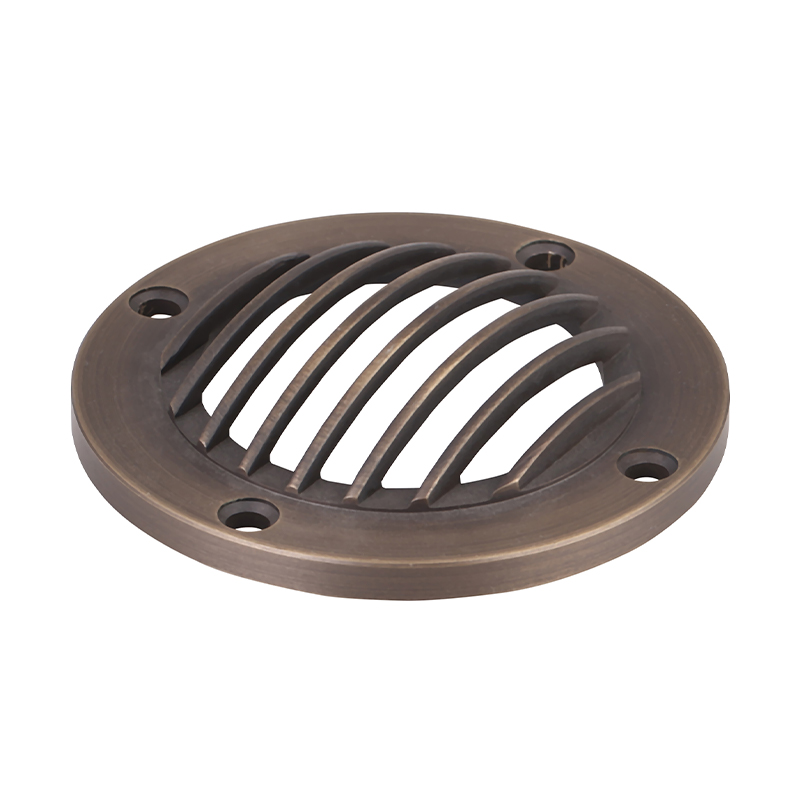
Decorative fixed strainers incorporate geometric patterns, custom logos, or heritage designs cast directly into the bronze surface. These elements transform functional drainage components into architectural features, justifying premium pricing in luxury hotel lobbies, upscale residential entries, and museum buildings where every visible element contributes to design cohesion.
Removable Basket Strainers
Removable basket strainers insert into the drain body below the grate, providing deeper debris collection capacity for applications generating significant solid waste. Commercial kitchen floor drains utilize bronze basket strainers with 2 to 4 liter capacities to capture food particles, grease chunks, and packaging debris before these materials enter grease interceptors or municipal sewer lines. The basket design allows rapid removal and emptying during routine cleaning without disassembling the entire drain assembly.
Basket perforation patterns affect both flow capacity and particle retention. Standard perforations of 3 to 5 millimeters diameter suit general debris, while fine mesh inserts of 1 to 2 millimeters capture hair and small particles in shower and locker room applications. Bronze mesh inserts resist corrosion better than stainless steel alternatives in chloride environments such as pool decks and marine facilities.
Adjustable Rim and Leveling Strainers
Adjustable rim strainers feature threaded or sliding mechanisms allowing height adjustment relative to the drain body. This adjustability proves essential when finished floor levels vary from design elevations due to substrate irregularities or tile thickness variations. Proper adjustment ensures the strainer rim sits flush with finished flooring, preventing trip hazards and allowing complete drainage without ponding. Threaded adjustment ranges of 15 to 25 millimeters accommodate typical installation tolerances.
Backwater Valve and Trap Seal Integrations
Advanced bronze strainer floor drains incorporate backwater prevention devices preventing sewage backup into occupied spaces during municipal system surcharges. Bronze swing check valves with elastomer seals provide reliable closure against 3 to 5 meter head pressures without the corrosion susceptibility of cast iron alternatives. Trap seal primer connections maintain water seals in infrequently used drains, preventing sewer gas migration through dry traps in guest bathrooms, seasonal facilities, and emergency shower stations.
Load Rating Classifications and Structural Requirements
Floor drains must withstand anticipated traffic loads without structural failure or deformation that compromises drainage function. Bronze strainer floor drains achieve load ratings through careful material selection and geometric design.
Light Duty Residential Applications
Residential bathroom and laundry floor drains typically require light duty ratings supporting 1.5 kilonewtons concentrated loads, equivalent to a 150 kilogram person standing on the strainer. Bronze strainers for these applications feature wall thicknesses of 3 to 4 millimeters with simple grid patterns. The material's inherent strength allows elegant, open designs that would fail if cast from weaker zinc alloys or plastics.
Medium Duty Commercial Ratings
Commercial kitchens, retail spaces, and public restrooms require medium duty ratings of 4.5 to 12.5 kilonewtons, supporting hand carts, cleaning equipment, and occasional wheeled traffic. Bronze strainers achieve these ratings through reinforced ribbing beneath the visible grate surface, increased wall sections to 5 to 6 millimeters, and optimized load paths transferring forces to the drain body rather than relying on strainer bending resistance alone.
Heavy Duty and Extra Heavy Duty Industrial
Factory floors, loading docks, and warehouse spaces require heavy duty ratings of 25 to 90 kilonewtons supporting forklift traffic and heavy pallet jacks. Aluminum bronze strainers with 8 to 10 millimeter wall sections and dense grid patterns achieve these ratings. The investment in premium bronze materials proves economical when drain replacement in active industrial spaces requires production shutdowns costing thousands of dollars per hour.
Airport apron drains and military vehicle maintenance facilities specify extra heavy duty ratings exceeding 150 kilonewtons, requiring specialized ductile iron or steel reinforced bronze composite designs. These extreme applications represent niche markets where standard bronze alloys require supplemental reinforcement to achieve required performance.
Hydraulic Performance and Flow Capacity
Bronze strainer floor drains must handle peak flow rates without overflow while maintaining self cleaning velocities that prevent sediment deposition in connected piping.
Flow Rate Calculations and Sizing
Drain sizing begins with estimating peak flow contributions from all sources. Commercial kitchen washdown operations generate 15 to 30 liters per minute per hose station, with multiple stations potentially operating simultaneously. Shower facilities produce 10 to 15 liters per minute per head during peak usage. Rainwater drainage from open balconies and terraces requires significantly higher capacities, with bronze drains sized for 50 to 100 liters per minute during design storm events.
The strainer free area, expressed as a percentage of total drain top opening, directly impacts flow capacity. Open grid bronze strainers achieve 60 to 75 percent free area, while decorative patterns with smaller openings may reduce this to 40 to 50 percent. Designers must balance aesthetic requirements with hydraulic performance, potentially increasing drain diameter or quantity when restrictive strainer patterns are specified.
Self Cleaning Velocity Maintenance
Drainage piping connected to bronze floor drains must maintain self cleaning velocities of 0.6 to 0.75 meters per second during normal flow to prevent grease accumulation and sediment deposition. Undersized piping creates excessive velocities causing noise and erosion, while oversized piping allows solids to settle. Bronze drain bodies with smooth internal surfaces and gradual transitions to outlet pipes minimize turbulence and maintain velocity profiles that transport debris efficiently.
Installation Best Practices and Substrate Integration
Proper installation ensures bronze strainer floor drains perform throughout their extended service life without leakage, settlement, or strainer misalignment.
Membrane Flashing and Waterproofing
Wet area installations require waterproof membrane integration with the drain body to prevent water migration into substrates. Bronze floor drains feature clamping rings or integral flanges securing sheet membranes such as chlorinated polyethylene (CPE), ethylene propylene diene monomer (EPDM), or modified bitumen. The clamping mechanism must compress the membrane uniformly without tearing, requiring smooth flange surfaces and appropriate torque on compression bolts.
Liquid applied membranes require compatible primers and sealants for bronze surfaces. Epoxy based waterproofing systems bond well to prepared bronze but may react with certain patina finishes. Always verify chemical compatibility between membrane materials and bronze surface treatments before application.
Leveling and Slope Considerations
Floor drains require installation at the low point of sloped floor surfaces to ensure complete drainage. Standard practice specifies 1 to 2 percent slope (10 to 20 millimeters per meter) toward drains in wet rooms and commercial kitchens. Large format tiles and linear drains have enabled more subtle slopes of 0.5 to 1 percent in contemporary residential bathrooms, but these reduced slopes demand precise drain positioning and substrate preparation.
Adjustable bronze strainer rims accommodate minor elevation corrections during tile installation, but excessive adjustment beyond 20 millimeters compromises rim support and creates weak points susceptible to damage. For thick floor assemblies including mud beds and heating systems, extension rings or deep sump bodies bring the strainer to proper finished floor elevation.
Connection to Drainage Piping
Bronze floor drains typically feature no hub connections for cast iron soil pipe, threaded connections for galvanized steel, or solvent weld sockets for ABS and PVC piping. No hub connections utilize stainless steel clamps with elastomeric gaskets providing flexible, leak resistant joints accommodating minor settlement. Threaded bronze outlets require thread sealant compatible with both bronze and connecting pipe material; PTFE tape or anaerobic sealants perform reliably.
Direct bronze to dissimilar metal connections require dielectric separation to prevent galvanic corrosion. Bronze drains connected to galvanized steel piping will accelerate steel corrosion unless plastic or rubber dielectric unions interrupt the electrical circuit. Copper drainage tubing may connect directly to bronze without significant galvanic issues due to similar electrochemical potentials.
Maintenance Protocols and Long Term Care
Bronze strainer floor drains require specific maintenance approaches that preserve both function and appearance without accelerating degradation.
Routine Cleaning and Debris Removal
Remove strainer grates weekly in commercial applications to clean accumulated debris from baskets and drain bodies. Use non abrasive brushes and pH neutral cleaners to avoid scratching bronze surfaces or stripping protective patinas. Acidic cleaners below pH 4 or alkaline cleaners above pH 10 attack bronze oxides and accelerate corrosion. Commercial degreasers containing sodium hydroxide will permanently damage bronze finishes and should never contact bronze drainage components.
High pressure water jetting effectively cleans drain bodies and connected piping without chemical exposure. Limit pressures to 100 bar for bronze components to prevent erosion of cast surfaces. Directional nozzles should avoid direct impingement on thin strainer sections that could deform under concentrated jet forces.
Patina Management and Finish Preservation
Natural bronze patina development proceeds through predictable color stages from salmon pink through brown to eventual green verdigris in outdoor or high humidity environments. Indoor bathroom installations typically stabilize at warm brown tones. Property owners desiring consistent appearance may apply wax coatings or lacquer finishes slowing patina progression, though these require periodic renewal every 1 to 2 years.
Uneven patina development indicates localized chemical exposure or galvanic activity requiring investigation. Green streaks on bronze surfaces often signal contact with ammoniated cleaners or incompatible metals. Address source contamination and gently clean affected areas with bronze specific restoration compounds to restore uniform appearance.
Grease Interceptor Coordination
Commercial kitchen bronze floor drains require connection to grease interceptors preventing fats, oils, and grease (FOG) from entering municipal sewer systems. Interceptor sizing follows plumbing codes based on fixture units or actual flow calculations. Bronze strainer basket maintenance directly impacts interceptor performance; clean baskets prevent excessive FOG bypass that overloads downstream treatment devices. Record maintenance dates and grease accumulation rates to optimize interceptor pumping schedules.
Application Specific Selection Guidelines
Matching bronze strainer floor drain specifications to specific project requirements ensures optimal performance and value realization.
Historic Building Restoration
Heritage restoration projects require bronze drains matching original specifications for material, pattern, and dimensions. Custom pattern casting from original samples or archival drawings reproduces ornate Victorian, Art Deco, or Mid Century Modern designs. Tin bronze C90300 provides authentic material composition and patina behavior matching century old installations. Specify minimum 4 millimeter wall sections for durability despite aesthetic preference for delicate appearing patterns.
Luxury Residential Bathrooms
High end residential wet rooms and spa bathrooms utilize bronze linear drains or custom point drains as design statements. Silicon bronze with brushed or oil rubbed bronze finishes coordinates with premium plumbing fixtures. Linear drains spanning 600 to 1200 millimeters accommodate large format tile installations with single plane slopes eliminating traditional four way floor pitching. Specify tile insert strainers for invisible drainage where the grate becomes indistinguishable from surrounding flooring.
Commercial Food Service Kitchens
Restaurant and institutional kitchens demand bronze drains meeting health department requirements for cleanability and corrosion resistance. Specify removable basket strainers with minimum 3 liter capacity, adjustable rims accommodating floor slope variations, and heavy duty ratings supporting kitchen equipment traffic. NSF International certification confirms compliance with food equipment sanitation standards. Integrate trap seal primers to maintain water seals during overnight and weekend closures.
Marine and Coastal Environments
Yachts, marinas, and coastal buildings experience salt spray and splash exposure that rapidly corrodes standard materials. Silicon bronze drains with minimum 5 millimeter wall sections withstand marine atmospheric corrosion while maintaining appearance. Specify sealed cleanout plugs preventing saltwater entry into drain bodies during storm events. Consider elevated strainer rims or trench drain configurations for dock washdown areas handling significant water volumes.
Cost Analysis and Value Justification
Bronze strainer floor drains command premium pricing compared to plastic or galvanized alternatives, requiring value based justification for specification.
Initial material costs for bronze floor drains range from $150 to $800 for standard sizes, compared to $30 to $100 for plastic alternatives and $50 to $200 for chrome plated brass. However, lifecycle cost analysis reveals bronze's economic advantages when replacement costs, maintenance labor, and disruption impacts are included. A bronze drain lasting 50 years at $400 initial cost averages $8 per year, while replacing three plastic drains at $75 each over the same period costs $4.50 annually in material alone, plus installation labor and finish repair expenses exceeding $200 per replacement event.
In commercial environments where drain failure causes business interruption, bronze's reliability translates to quantifiable risk reduction. A restaurant kitchen closed for 24 hours due to drain replacement loses $5,000 to $15,000 in revenue, dwarfing the incremental material cost of premium bronze specification. Insurance underwriters increasingly recognize material quality in risk assessments, with some policies offering premium reductions for bronze drainage in high value properties.
Specify bronze strainer floor drains for installations requiring longevity exceeding 25 years, heritage authenticity, marine corrosion resistance, or heavy duty load capacity. Select silicon bronze for general architectural and marine applications, tin bronze for historic restoration projects, and aluminum bronze for industrial heavy traffic environments. Verify load ratings match anticipated traffic, ensure hydraulic capacity exceeds peak flow demands, and confirm waterproofing integration compatibility with selected drain body configuration.