Español
 عربى
عربى
 Deutsch
 русский
 Français

How is the "Grade 304/316 Standard" Transforming the Longevity of Modern Bathrooms?
In modern residential architecture, the reliability of bathroom systems directly impacts living experience and building safety. Stainless steel shower faucet fittings are rapidly replacing traditional brass materials due to their superior physical properties, becoming the top choice for the high-end sanitary market. This trend reflects not only a consumer pursuit of aesthetics but also a deeper demand for material safety and structural strength.
Why should homeowners prioritize Stainless Steel over Brass for Shower Fittings?
Choosing stainless steel shower accessories is not just about looks; it is about long-term family health and reduced maintenance costs. Compared to brass materials, where lead content is difficult to control, stainless steel demonstrates absolute advantages in safety and durability.
-
Corrosion Resistance (Superior Anti-corrosion and Oxidation Performance): Bathrooms are harsh environments characterized by high temperature, high humidity, and frequent contact with various chemical detergents (such as shampoos and strong cleaners). Grade 304 or 316 stainless steel contains over 18% chromium and 8% nickel. These alloying elements spontaneously form an extremely dense and self-healing passivation film on the material surface. This film effectively blocks the penetration of moisture and oxygen, preventing pitting or stress corrosion cracking. Even in coastal areas with high salt content, stainless steel fittings maintain structural integrity without the progressive rusting and valve body failure typical of traditional metals.
-
Lead-Free Safety (Zero Lead and Heavy Metal Migration): As global standards for drinking water safety continue to rise, stainless steel stands out as an inherently lead-free material. Traditional brass faucets often require the addition of lead during the casting process to improve machinability; even after de-leading treatments, there remains a long-term risk of heavy metal leaching. Stainless steel does not require these harmful additives and fully complies with the strictest international drinking water safety certifications (such as North American NSF/ANSI 61). This ensures that the water remains pure throughout long-term use, building a physical defense for family health.
-
Aesthetic Retention (Durability of Appearance and Minimalist Maintenance): Chrome-plated brass fittings often experience bubbling, peeling, or the development of green "verdigris" after 3-5 years due to the difference in thermal expansion coefficients between the plating and the base metal. In contrast, stainless steel fittings are usually finished via physical polishing or brushing, making the color and material consistent throughout. Even high-end PVD vacuum coatings form an exceptionally strong bond with the stainless steel substrate. The high surface hardness makes it resistant to scratches and fingerprints, and it can be restored to its original luster with a simple wipe, greatly reducing cleaning difficulties for hotels and households.
What are the latest innovations in Stainless Steel Shower Faucet Fitting precision casting?
Advancements in investment casting and 5-axis linkage machining processes have pushed the functionality and design of stainless steel shower accessories to new heights. Modern factories are utilizing high-precision digital technology to solve traditional pain points like rapid work hardening and high processing costs.
-
Leak-Proof Engineering (Nano-level Leak Prevention and Tolerance Control): Utilizing high-precision 5-axis CNC machining centers, modern manufacturing plants can now control the tolerance of stainless steel parts within ±0.005mm or even less. This extreme precision is critical for the ceramic valve seat of shower faucets. Precise flatness and verticality ensure no mechanical gaps when the valve is opened or closed, completely eliminating micro-leakage caused by thermal deformation or uneven stress on seals. Furthermore, precision internal wall processing reduces the space for limescale accumulation, further extending the valve core's service life.
-
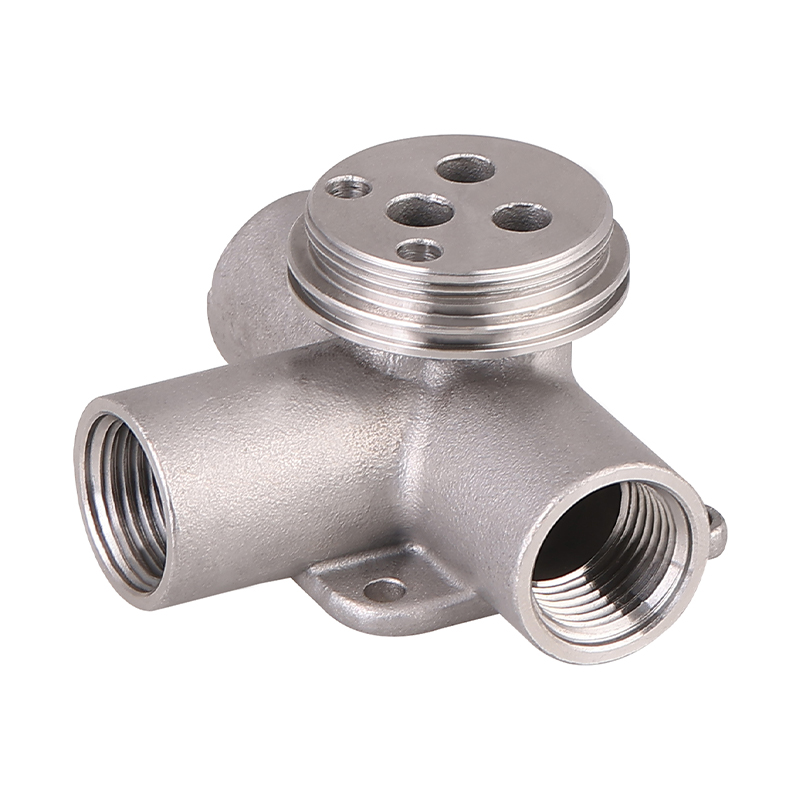
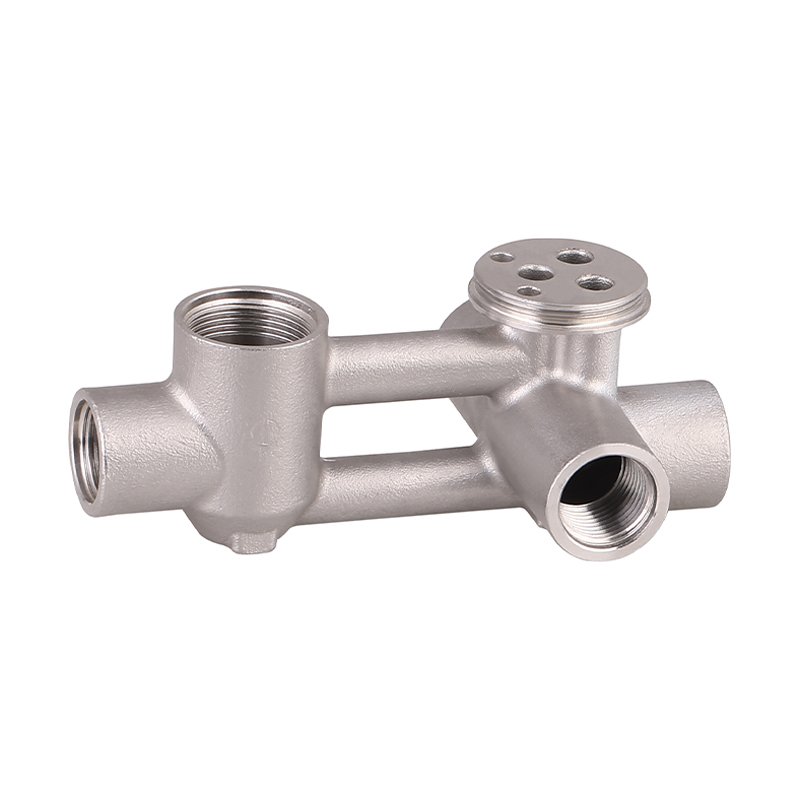
Smart Integration (Intelligent Integration and Modular Base Design): With the rise of smart homes and digital thermostatic shower systems, the structural design of stainless steel fittings is undergoing profound changes. Modern stainless steel castings are beginning to include pre-reserved precision sensor interfaces and electromagnetic valve mounting bases. Because stainless steel has excellent structural stability and magnetic shielding characteristics, it provides a sturdy and protected environment for complex electronic control components. This modular design allows users to upgrade their shower systems without destroying walls, embodying a "future-ready" design philosophy.
-
Easy-Installation Design (Convenient Installation and Ergonomic Optimization): Modern stainless steel accessories introduce universal standardized threads (such as G1/2 standards) and adaptive quick-connect technologies. By applying precision spinning processes at the interfaces, the reliance on sealant tape or heavy-duty wrenches during installation is reduced. Simultaneously, considering regional water pressure differences, internal flow channels are optimized through fluid dynamics simulations to provide a rich and delicate spray even in low-pressure environments, directly improving the end-user experience.
Why is the Demand for High-Precision "Stainless Steel Elbows" Surging in the Auto Parts Sector?
Against the backdrop of the automotive industry's pursuit of lightweighting, high fuel efficiency, and stringent emission standards, precision stainless steel elbows have become irreplaceable core components in exhaust systems, turbocharging systems, and New Energy Vehicle (NEV) battery cooling systems.
How do Stainless Steel Elbows optimize vehicle exhaust and cooling systems?
Stainless steel elbows in automotive parts are not just conduits for fluid transmission; they are decisive factors in vehicle thermal management and power system performance. Fine control over bending radius, wall thickness, and material composition can significantly enhance overall vehicle performance.
-
Thermal Dynamics (Extreme Thermal Performance and High-Temperature Fatigue Resistance): Exhaust manifolds and front-end elbows can see temperatures soar to 800°C or even 1000°C when the engine is under full load. Grade 304L or 409L stainless steel possesses a very low thermal expansion coefficient and excellent high-temperature creep resistance. During frequent ignition-heating-flameout-cooling cycles, this material effectively prevents structural cracks or weld failures caused by thermal fatigue. This not only ensures engine bay safety but also guarantees that precision components like oxygen sensors can accurately monitor emission data in a stable temperature environment.
-
Airflow Efficiency (Fluid Dynamics Optimization and Backpressure Reduction): In racing and high-performance road cars, exhaust backpressure is a "power killer." Stainless steel elbows with ultrasonically cleaned inner walls and high circularity consistency significantly reduce turbulence losses at bends. By designing non-equidistant elbows based on airflow pulse simulations, exhaust gas discharge can be accelerated, significantly improving engine volumetric efficiency. This translates directly into torque curve optimization, giving the vehicle faster acceleration response even at low RPMs.
-
Weight Reduction (Lightweighting Strategies and Thin-Wall Design): With global emission regulations (such as Euro 7 or China VI B) strictly limiting fuel consumption, reducing vehicle weight is a top priority for manufacturers. High-strength stainless steel alloys (such as the austenitic series) allow engineers to reduce wall thickness from the traditional 2.0mm to 1.2mm or even 1.0mm without sacrificing structural strength. This cumulative change across the entire exhaust and cooling system can reduce vehicle weight by several kilograms—one of the most cost-effective ways to achieve energy saving and emission reduction goals.
What are the critical quality benchmarks for Auto Parts Stainless Steel Elbows in 2026?
Entering 2026, the acceptance standards of Original Equipment Manufacturers (OEMs) for stainless steel elbows have evolved from simple "physical shape compliance" to the rigorous level of "microscopic process consistency."
-
Bending Technology (Advanced Mandrel Bending and Non-Destructive Forming): Mandrel bending has become the core of high-performance auto parts manufacturing. During the bending process, by placing multi-section linked support mandrels inside the tube, issues like excessive thinning of the outer wall, inner wrinkling, or cross-sectional collapse are perfectly resolved. This process ensures that even at large 180-degree angles, the cross-sectional area fluctuation remains below 5%, which is decisive for maintaining pressure stability in turbocharging systems.
-
Vibration Resistance (Dynamic Seismic Performance and Stress Relief): During vehicle operation, chassis components are under constant high-frequency vibration. High-quality stainless steel elbows require not only good material ductility but also the elimination of forming stress through annealing. This allows the elbows to absorb small amounts of energy like a spring when facing road impacts and engine vibrations, avoiding resonance noise or metal peeling due to vibration fatigue, thereby ensuring a full life cycle durability of over 15 years.
-
Welding Integrity (Digital Automated Welding and Non-Destructive Testing): Modern production lines commonly use robotic fully automatic TIG (Argon Arc) or plasma laser welding. These technologies achieve single-sided welding with double-sided formation, ensuring flat internal weld beads without splash to avoid obstructing fluid movement. Every batch of products undergoes X-ray flaw detection or high-pressure airtightness testing to ensure 100% safety under high flow rates and pressure impacts (such as in high-performance intercooler piping), with zero risk of bursting.
The following table compares the differences between sanitary fittings and automotive elbows in terms of materials, processes, and key performance indicators to help professional buyers make more accurate procurement decisions:
|
Evaluation Dimension |
Shower Faucet Fitting |
Auto Parts Stainless Steel Elbow |
|---|---|---|
|
Main SS Grades |
AISI 304, 316, 316L (High Molybdenum for chemical resistance) |
409, 439 (Ferritic) or 304, 321 (Austenitic heat resistance) |
|
Core Process |
Investment Casting + Multi-axis CNC Machining |
Auto Cold Bending + Mandrel Support + Laser Welding |
|
Key Physical Metric |
Water Pressure Sealing (usually >1.6MPa) |
Thermal Expansion Stability (-40°C to 1000°C) |
|
Surface Requirement |
Very High: Ra < 0.2um Mirror or Brushed |
Functional: Inner Smoothness, Anti-rust, Thermal Coating |
|
Compliance Standards |
NSF, WRAS, CE (Hygiene & Drinking Water) |
IATF 16949, SAE (Auto Quality Management) |
|
Design Tolerance |
Tight Fit Class (IT6 - IT7) |
Fluid Dynamic Class (IT8 - IT9) |
|
Average Service Life |
10 - 20 Years (Wear & Oxidation resistance) |
150,000+ km (High Temp & Vibration fatigue) |
The Convergence of Industries: How Smart Manufacturing Benefits Both Faucets and Auto Parts?
Despite belonging to different industries, bathroom fixtures and auto parts are converging in stainless steel processing technologies. This "Technology Cross-over" significantly enhances the overall efficiency of global manufacturing.
How does Automated Polishing enhance the quality of both fittings and elbows?
Automated polishing robots are being popularized at the manufacturing end at an unprecedented rate, solving labor shortages and establishing a new industry quality ceiling.
-
Ultimate Consistency: Whether it is the complex curved surface of a shower faucet or the exposed exhaust tailpipe of a car, robot polishing systems use force sensors to accurately perceive and maintain constant grinding pressure. This avoids inconsistent luster or over-grinding caused by human fatigue, ensuring that every batch of thousands of products is identical in vision and touch, significantly reducing the defect rate.
-
Efficiency Gains: Compared to traditional manual polishing, automated workstations can operate 24/7, with processing time per piece reduced by over 40%. As the cost of robots decreases annually, the marginal cost of high-quality stainless steel fittings is approaching that of traditional low-end metals, causing a sharp increase in the popularity of stainless steel products in the global mid-to-high-end markets.
What role does Sustainable Sourcing play in the Stainless Steel supply chain?
Sustainability is no longer a brand gimmick but a hard ticket to enter the global mainstream supply chain. As a "green metal," stainless steel has a very low environmental impact over its life cycle.
-
100% Recyclability: Stainless steel is one of the few metal materials that can be recycled with almost 100% physical performance recovery. Scrapped automotive chassis elbows or old bathroom valves can be sent back to electric arc furnaces for re-melting. Since the alloy quality does not degrade during recycling, this closed-loop system greatly reduces the mining of primary ores like iron, nickel, and chromium, aligning with circular economy principles.
-
Carbon Footprint Reduction: Leading manufacturers have begun applying green electricity in production and introducing blockchain technology to track the "carbon content" of each batch of stainless steel. For global top-tier brands like Mercedes-Benz, Tesla, or Kohler, choosing low-carbon footprint stainless steel parts is not just a social responsibility but a strategic move to hedge against future "Cross-border Carbon Taxes."