Español
 عربى
عربى
 Deutsch
 русский
 Français

Before you buy a single fitting for a PEX plumbing system, you have to decide which PEX type you are installing. The difference between PEX A and PEX B fittings is not a cosmetic label. It drives the joint method, the tooling you carry, the flow rate at your fixture, and the long-term leak risk behind a finished wall. The practical starting point is this: PEX A is designed for expansion-style fittings, PEX B is designed for crimp, press, or push-fit fittings. If you select a fitting family first, the rest of the project becomes much easier to plan. In manufacturing brass fittings for plumbing systems, we have seen that most premature joint failures trace back to mixing fitting types, not to the pipe itself.
How PEX A and PEX B are made (and why it changes fittings)
PEX A is produced using the peroxide, or Engel, method. This creates a high degree of molecular cross-linking, which gives the pipe a stronger memory. If you bend PEX A, it tends to spring back. If you expand it to insert a fitting, it contracts back tightly around the fitting. That memory is the foundation of the expansion joint system.
PEX B is made with a silane moisture-cure process. It is slightly stiffer and holds its shape with less springback. The pipe does not have the same expansion memory, so it needs a mechanical system to create a seal. A copper crimp ring, a stainless steel clamp, or a brass press sleeve compresses the pipe onto a fitting insert. That mechanical compression is what makes the joint reliable.
These manufacturing differences matter because they determine which fittings can be used. A PEX A expansion ring is useless on PEX B pipe, and a PEX B crimp fitting will not perform properly on PEX A pipe. When you compare PEX A vs PEX B fittings, you are really comparing two different joining philosophies that happen to use the same raw material family.
The fitting family differences: expansion vs crimp/press
With PEX A, the joint is created by the pipe itself. You expand the PEX A pipe and a plastic expansion ring, slide the fitting in, and wait for the pipe to shrink back. The fitting itself is often a simple brass or plastic insert. There is no metal ring squeezing the pipe from the outside, so the joint retains a larger inside diameter and lower flow resistance.
With PEX B, the joint is mechanical. The pipe is pushed over a fitting body, then a copper crimp ring or a stainless steel clamp is tightened around the pipe. Brass press fittings follow the same principle: a metal sleeve is compressed onto the pipe with a dedicated press tool. The fitting body is typically brass or a high-performance polymer.
Brass press fittings are a common choice in PEX B systems because they are widely available, field-proven, and easy to inspect. A brass PEX press fitting equal tee is one of the most practical components for branch lines in a residential run. It gives the installer a stable connection that can be visually verified before the wall goes back up: once the tool is closed, the fitting body shows a clear indicator that the press is complete.
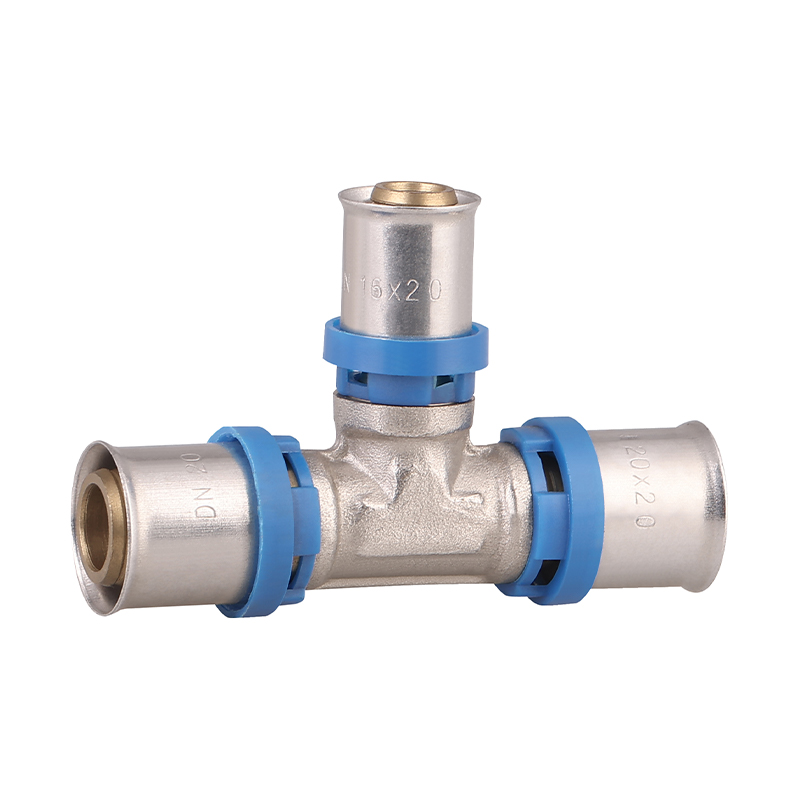 Brass PEX Press Equal Tee for Reliable Branch ConnectionsThis three-port brass tee is designed for PEX B systems, with forged construction and nickel plating. It suits potable water and radiant heating, providing pressure-tested performance for concealed installations.View Product →
Ninghai Gaohua Metalwork Products manufactures brass PEX press fittings with tight dimensional tolerances and pressure-tested performance. The equal tee is a heavy user in potable water and radiant heating lines, where a casual seal is not acceptable. The company’s production process includes forging, precision machining, nickel plating, assembly, and pressure testing, which means the fitting you install has already been tested above the normal working pressure.
Installation efficiency and what you need on the bench
Expansion fittings require an expansion tool plus a gauge. You expand the pipe and ring, insert the fitting, wait for the ring to relax, then check the joint with a gauge. The process is methodical and gives a very clean joint, but the tool is expensive and not used for anything else.
Crimp and press fittings require a crimp tool or a press tool, plus a go/no-go gauge. For copper crimp rings, the gauge ensures the ring is at the correct diameter after crimping. For press fittings, the tool closes a sleeve and the fitting shows a visual indicator. This method is fast, and the fitting range is broader: tees, elbows, male adapters, female adapters, wall plates, and reduction couplings are all ready to use.
Quick-connect fittings remove the tool entirely. Some PEX B systems use push-fit style brass fittings that grip the pipe with internal teeth and an O-ring. They are popular for repair work and for hard-to-reach spots where a crimp tool cannot fit. The seal depends on dimensional accuracy: the pipe outside diameter, the fitting bore, and the O-ring snap must all be within tolerance.
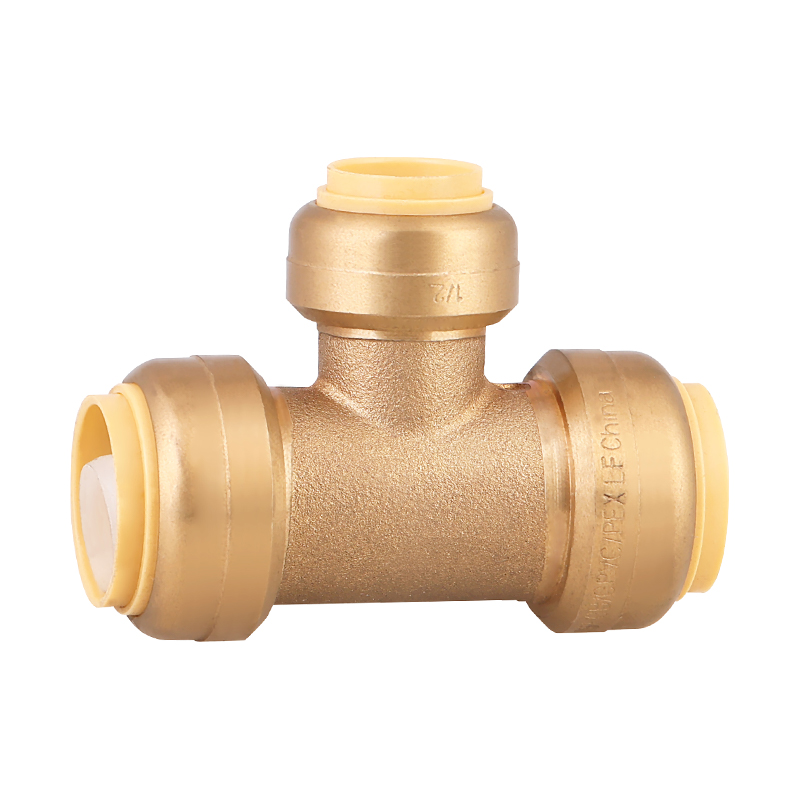 Tool-Free Quick-Connect PEX Fitting for Versatile Pipe JoiningPush-to-connect fitting works with copper, CPVC, PEX, PPR, and PEX-AL-PEX. Its lead-free brass body and EPDM O-ring ensure leak-proof seals for high-pressure and high-temperature applications, ideal for repairs and tight spaces.View Product →
When you choose a quick-connect PEX fitting, you trade installation speed for the need to verify that the fitting actually seats. A well-made brass quick-connect fitting with a stable O-ring and a clean inner body is the reliable choice. In our experience, push-fit fittings are excellent for branch connections and repairs, but they should not be used as the primary joining method for an entire house unless the fittings are from a single reputable batch.
Flow, flexibility, and long-term performance
PEX A expansion joints generally preserve the full inside diameter of the pipe. Less restriction means lower pressure drop, which is noticeable in long PEX runs or when multiple fixtures are open at the same time. PEX B crimp fittings often have an internal insert that reduces the bore slightly. The reduction is small in a 1/2-inch or 3/4-inch line, but it adds up across a whole system.
Flexibility is another differentiator. PEX A bends tighter, so you can route a line around an obstacle without adding a coupling. PEX B is stiffer, which means it needs more supports and more fittings. Every coupling adds a potential leak point. If you use brass fittings, the total number of connectors on a run directly affects both cost and leak probability.
On the other side, PEX B has a strong record of chlorine resistance and dimensional stability. The pipe is less likely to kink during installation, and the brass crimp/press fitting system has been used in millions of homes. A brass body resists corrosion in potable water and is forgiving of minor pressure spikes. That is why PEX B plus quality brass fittings remains the workhorse choice in residential plumbing.
Here is a concise comparison that sums up the practical differences:
| Property | PEX A fittings | PEX B fittings |
|---|---|---|
| Manufacturing process | Peroxide (Engel) method | Silane moisture-cure method |
| Typical joint method | Expansion ring | Crimp ring, clamp, or press sleeve |
| Inside diameter at joint | Close to pipe ID | Slight restriction from fitting insert |
| Flexibility | Higher | Lower |
| Tooling cost | Higher expansion tool | Crimp or press tool, often lower cost |
| Common fitting material | Brass insert with expansion ring | Brass press or crimp body |
| Best suited for | Long runs, complex routing, maximum flow | Standard residential, cost-sensitive projects |
Cost, standards, and procurement risk
PEX A systems tend to cost more per fitting and per tool. Expansion rings are more expensive than copper crimp rings. PEX B has a mature supply network, so you can source brass couplings, tees, elbows, and adapters at competitive prices from multiple vendors.
When you buy fittings for PEX B, ask for the outside diameter tolerance of the pipe and the fitting’s pressure rating. A good brass fitting will be rated for CTS dimensions, and the manufacturer should pressure-test the entire assembly. In our production, every PEX fitting goes through a pressure test above the working pressure. This is not a nicety; it catches casting porosity, poor thread sealing, and undersized sleeves before they become a problem in the field.
Standards also differ. In North America, PEX B systems are commonly governed by ASTM F877 for the pipe and F1807 for crimp fittings. PEX A expansion fittings follow F1960. In Europe, EN 1367 and related standards apply. Always read the local plumbing code before you choose a fitting family. A fitting that looks the same from the outside can have a completely different joint geometry and rating.
Which system should you choose?
If you need maximum flow and the most forgiving pipe, PEX A with expansion fittings is the premium choice. If you want a system with lower tool cost, more brass fitting options, and a proven track record in residential plumbing, PEX B with brass crimp or press fittings delivers the best balance.
Do not mix PEX A and PEX B fittings on the same run. Even if a fitting physically fits, the joint geometry has been designed for a specific pipe hardness and expansion behavior. Mixing systems is one of the top causes of premature leaks.
For many contractors and homeowners, the answer is clear: PEX B plus high-quality brass fittings is the pragmatic route. The fittings are mechanical, easy to verify, and the brass body resists corrosion—a big advantage when the fitting is tucked behind a finished wall. Selecting a supplier who controls the complete brass fitting process, from forging to pressure testing, reduces warranty risk. That is where a factory such as Ninghai Gaohua Metalwork Products fits into the picture. Their PEX press fittings are manufactured with tight tolerances and tested before packaging, which gives you confidence in the joint before the wall is closed.
The best time to learn which fitting system your plumber or contractor plans to use is before the first hole gets cut. Compare the tooling, the cost per joint, the flow impact, and the pressure-test record of the fitting. The difference between PEX A and PEX B fittings is not academic; it will show up in your water pressure, your installation time, and your peace of mind.