Español
 عربى
عربى
 Deutsch
 русский
 Français

In the intricate world of plumbing and architectural hardware, the choice of drainage components often dictates the long-term integrity of a building's infrastructure. The Bronze Strainer Floor Drain stands as a pinnacle of durability and functional design, specifically engineered to handle the rigorous demands of both high-moisture residential environments and heavy-duty industrial applications. Unlike standard plastic or light-gauge steel alternatives, a "Bronze Strainer Floor Drain" leverages the unique metallurgical properties of bronze alloys—primarily copper and tin—to provide a solution that is virtually immune to the corrosive effects of wastewater and harsh cleaning chemicals. This comprehensive analysis explores the structural advantages, hydraulic efficiency, and specialized maintenance protocols that make this specific type of floor drain an essential specification for architects and mechanical engineers alike.
What Are the Material Properties and Structural Advantages of a Bronze Strainer Floor Drain?
The fundamental reason for selecting a Bronze Strainer Floor Drain lies in the inherent strength and chemical stability of the material itself. Bronze has been the preferred alloy for marine and hydraulic applications for centuries, and its application in modern floor drainage systems continues this tradition of excellence.
-
Unrivaled Corrosion Resistance and Longevity: One of the most critical "product" benefits of the Bronze Strainer Floor Drain is its exceptional resistance to dezincification and pitting corrosion. In drainage environments, the metal is constantly exposed to a cocktail of gray water, detergents, and acidic substances. While stainless steel can sometimes suffer from tea-staining or crevice corrosion in high-salinity or low-oxygen environments, bronze develops a protective stable oxide layer. This layer acts as a permanent shield, preventing the deep structural degradation that causes other drains to fail. Consequently, the "Bronze Strainer Floor Drain" is frequently specified for commercial kitchens, laboratories, and high-end bathrooms where the cost of replacing a failed sub-floor drain is prohibitively high due to the necessity of ripping up tile and concrete.
-
Heavy-Duty Load Bearing and Impact Strength: The structural integrity of a Bronze Strainer Floor Drain is significantly higher than that of its counterparts. In commercial settings such as warehouses, garages, or mechanical rooms, floor drains must withstand the weight of heavy machinery, pallet jacks, and constant foot traffic. A high-grade bronze grate is naturally tough and possesses high tensile strength, meaning it will not crack or warp under significant point loads. This "heavy-duty" nature ensures that the strainer remains flush with the floor surface, eliminating tripping hazards and maintaining a safe environment. Furthermore, the casting process used for bronze allows for thicker cross-sections in the grate design, providing a safety margin that far exceeds the requirements of standard plumbing codes.
-
Antimicrobial and Hygienic Characteristics: An often-overlooked advantage of the Bronze Strainer Floor Drain is its natural antimicrobial property. Since bronze is a copper-based alloy, it inherently inhibits the growth of bacteria, mold, and fungi on its surface. In a drainage scenario, where "biofilm" and "sludge" can accumulate and cause unpleasant odors or health risks, the use of bronze helps to maintain a cleaner interface at the point of water entry. This makes the "Bronze Strainer Floor Drain" a superior "hygienic" choice for food processing facilities and healthcare environments where controlling the spread of pathogens is a top priority. The smooth, non-porous nature of the finished casting also prevents the mechanical anchoring of debris, making the initial filtration process more efficient.
Below is a technical specification table comparing different configurations of professional-grade bronze drains:
|
Feature Specification |
Round Strainer Configuration |
Square Strainer Configuration |
Heavy-Duty Industrial Model |
|---|---|---|---|
|
Primary Material |
Cast Bronze (C83600/C84400) |
Cast Bronze (C83600/C84400) |
Silicon Bronze / Gunmetal |
|
Strainer Diameter |
4" to 8" |
4" x 4" to 10" x 10" |
12" and Above |
|
Load Rating |
Light to Medium Duty |
Medium Duty |
Extra Heavy Duty (10,000+ lbs) |
|
Connection Type |
Threaded / No-Hub / Push-On |
Threaded / No-Hub |
Flanged / Reinforced Hub |
|
Free Area (Drainage) |
6.5 sq. in. (Typical 4") |
8.2 sq. in. (Typical 4") |
Custom High-Flow Patterns |
|
Anti-Clogging Tech |
Removable Debris Basket |
Integrated Silt Bucket |
Secondary Inner Strainer |
How Does the Design of the Strainer Mechanism Prevent Clogging and Optimize Flow?
The efficiency of a Bronze Strainer Floor Drain is not just about the metal; it is about the precision engineering of the "strainer" mechanism itself. The geometry of the holes, the depth of the bowl, and the integration of secondary filtration systems are all designed to maximize water throughput while capturing harmful solids.
-
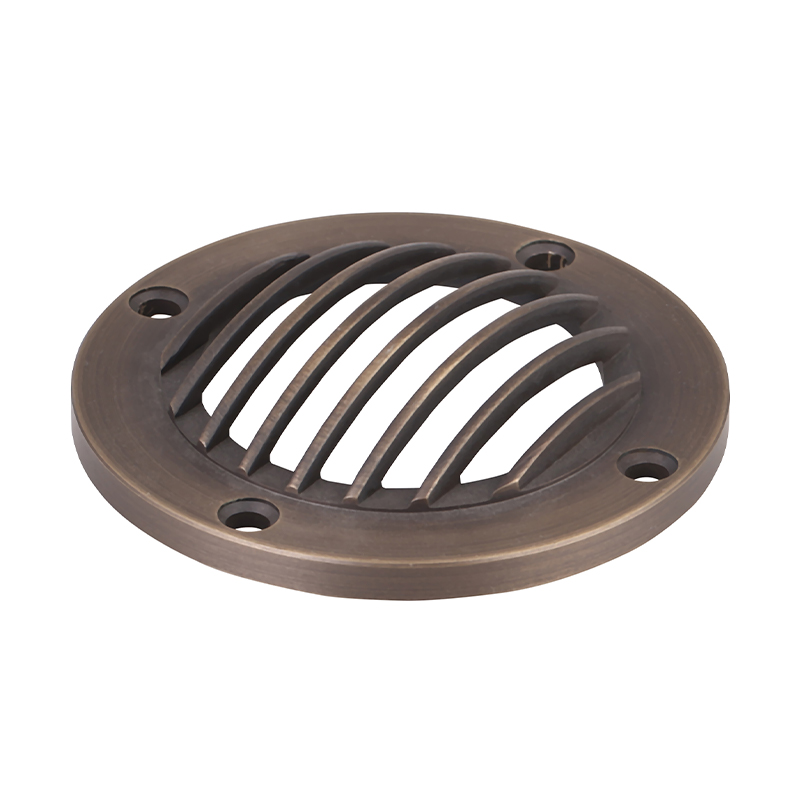
Precision-Engineered Grate Patterns: The top grate of a Bronze Strainer Floor Drain is designed with a specific "free area" ratio. This refers to the total surface area of the openings compared to the solid metal. Engineers must balance the need for high-flow drainage with the requirement to prevent large objects from entering the plumbing stack. The slots in a bronze strainer are typically tapered—wider at the top and narrower at the bottom—or vice versa, depending on the specific "anti-clogging" goal. This prevents small stones or debris from becoming wedged in the grate. In high-flow areas, a "Bronze Strainer Floor Drain" might feature a perimeter-gap design that allows water to enter from the edges, significantly increasing the gallons-per-minute (GPM) capacity without requiring a larger overall footprint.
-
Integrated Debris Baskets and Silt Buckets: Many advanced models of the Bronze Strainer Floor Drain come equipped with an internal sediment bucket or debris basket, also constructed from bronze or stainless steel. This secondary layer of protection is vital for commercial applications like restaurants or pet grooming salons where hair, food scraps, or sediment are common. The basket is designed to be easily removable once the top grate is unscrewed. By capturing solids before they reach the P-trap, the "Bronze Strainer Floor Drain" prevents expensive "clogs" deep within the building's piping system. The deep-sump design of these bronze bodies ensures that even when the basket is partially full, there is still enough "head pressure" and clearance for water to flow around the debris and down the drain.
-
Vandal-Resistant and Security Features: In public restrooms, schools, and correctional facilities, the Bronze Strainer Floor Drain often incorporates security features to prevent unauthorized removal of the grate. These include "vandal-proof" screws that require specialized tools for extraction. Because bronze is a dense and valuable metal, secure fastening is also a deterrent against theft. The weight of the bronze itself contributes to its stability; once seated in the drain body, a bronze strainer is less likely to rattle or shift than a lightweight plastic version. The "product" design often includes a threaded adjustable head, allowing the installer to fine-tune the height of the strainer to be perfectly level with the finished floor, whether it be epoxy, tile, or polished concrete.
What Are the Installation Best Practices and Maintenance Requirements for Bronze Drains?
To ensure that a Bronze Strainer Floor Drain performs for its intended lifespan—which can exceed fifty years—proper installation and a consistent maintenance schedule are paramount. The interaction between the drain body and the surrounding floor material is a critical engineering junction.
-
Proper Sub-Floor Integration and Waterproofing: The installation of a Bronze Strainer Floor Drain typically begins during the rough-in stage of construction. The drain body must be securely anchored to the piping system using the appropriate connection—whether it be a "no-hub" coupling or a threaded joint. A crucial component of the installation is the "flashing clamp" or "membrane clamp." This part of the bronze assembly is designed to pinch the waterproofing membrane (the "liner") securely to the drain body. This ensures that any moisture that seeps through the tile grout is directed into the "weep holes" of the drain rather than rotting the sub-floor. When installing a "Bronze Strainer Floor Drain" in a multi-story building, this secondary drainage path is the only thing preventing catastrophic water damage to the ceilings below.
-
Cleaning Protocols and Surface Preservation: While the "Bronze Strainer Floor Drain" is incredibly durable, it still requires periodic cleaning to maintain its hydraulic efficiency and aesthetic appeal. Maintenance personnel should avoid using highly abrasive metal brushes that could deeply score the bronze surface. Instead, nylon brushes and mild enzymatic cleaners are recommended. Over time, bronze will naturally darken—a process known as "toning." For high-end architectural applications where the original "bright" bronze look is desired, specialized metal polishes can be used. However, in most industrial settings, the natural patina is welcomed as it provides an additional layer of protection. The removable nature of the strainer means that "maintenance" also involves inspecting the interior of the drain body for any scale buildup or "calcium deposits" that could restrict flow over several decades of use.
-
Gasket Integrity and Trap Primer Connection: A sophisticated Bronze Strainer Floor Drain often includes a port for a "trap primer." This is a small water line that trickles a tiny amount of water into the drain to ensure the P-trap stays full, preventing sewer gases from entering the building. During the maintenance of a bronze drain, it is important to verify that this port is not blocked by debris. Additionally, any rubber gaskets used in the adjustable head of the strainer should be inspected for signs of dry rot or compression set. Replacing a five-dollar gasket every ten years is a small price to pay for ensuring the "Bronze Strainer Floor Drain" remains a perfectly sealed and functioning component of the building's life-safety and sanitation systems.